
Academic Lead and Lecturers
A multidisciplinary team spanning quantitative risk, machine learning, emerging-risk applications and trustworthy AI.
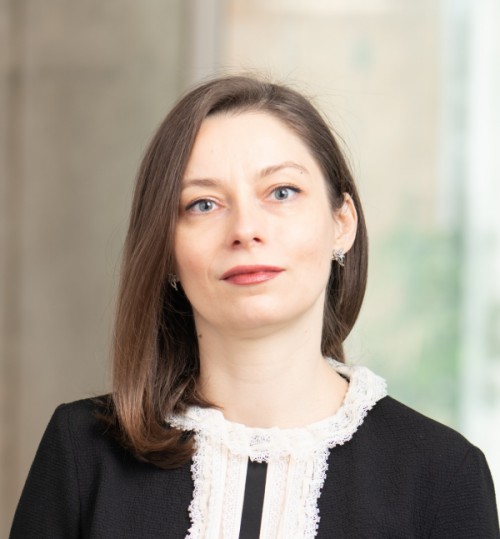
Prof. Dr. Delia Coculescu
Programme Director
executive.edu@dm3l.uzh.ch
01
Quantitative Foundations
Ashkan Nikeghbali
Michel Dacorogna
02
AI MODELLING, VALIDATION & MONITORING
Reinhard Furrer
Anastasiia Koloskova
Nicola Serra
Jan Dirk Wegner
03
EXPLAINABLE AND ETHICAL AI
François Hu
04
APPLICATIONS STUDIOS: EMERGING RISKS
Alexandre Bovet
Reinhard Furrer
Caroline Hillairet
Jan Dirk Wegner
MODULE 1 | 4 ECTS
Quantitative Foundations for Risk Analysis
Probability, extreme events, dependence, aggregation and capital thinking.
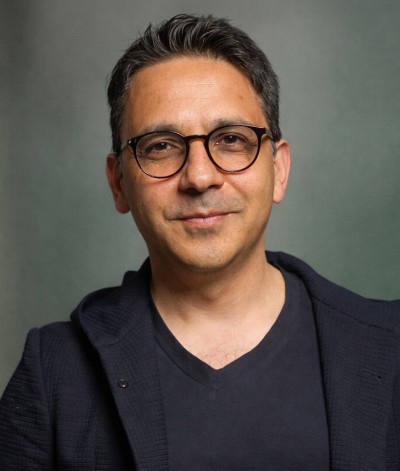
Prof. Dr. Ashkan Nikeghbali
Professor of Probability Theory | Institute of Mathematics, UZH
Prof. Dr. Ashkan Nikeghbali holds the Probability Theory chair at the Institute of Mathematics, University of Zurich. His work spans stochastic processes, mathematical finance, dependence, loss portfolios, random matrix theory and refined limit theorems. In the CAS, he provides the mathematical foundations for thinking clearly about extreme events, diversification and aggregation. Participants learn to question the assumptions behind a risk model and to understand how those assumptions shape the stability and interpretation of quantitative results.
Dr. Michel Dacorogna
Partner, Prime Re Solutions | External Lecturer, UZH
Dr. Michel Dacorogna combines a long research record with senior experience in reinsurance risk management. He is a partner at Prime Re Solutions and an external lecturer at UZH. Previously, as Deputy Group Chief Risk Officer at SCOR, he was responsible for Solvency II and helped build the group's internal model over more than a decade. His work covers insurance mathematics, capital management, risk aggregation, model validation and reinsurance efficiency. In the CAS, he links modelling choices with governance and management practice, showing how quantitative tools support capital allocation, portfolio steering and communication with decision-makers.
MODULE 2 | 3 ECTS
AI for Risk Modelling, Validation and Monitoring
Statistical learning, optimisation, uncertainty, validation and reliable deployment.
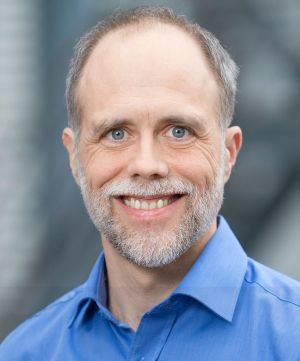
Prof. Dr. Reinhard Furrer
Professor of Applied Statistics | Head of DM3L, UZH
Prof. Dr. Reinhard Furrer is Professor of Applied Statistics and Head of the Department of Mathematical Modeling and Machine Learning at UZH. His research focuses on spatial and spatio-temporal statistics, non-stationary processes, large datasets, robust geostatistics and the statistical evaluation of climate-model output. He has extensive experience translating methodological rigour into interdisciplinary applications. In the CAS, he contributes the statistical backbone for model validation and monitoring: uncertainty quantification, robustness, data quality, distribution shift and the interpretation of performance across time, space and changing risk environments. He also contributes to the climate and emerging-risk studio.
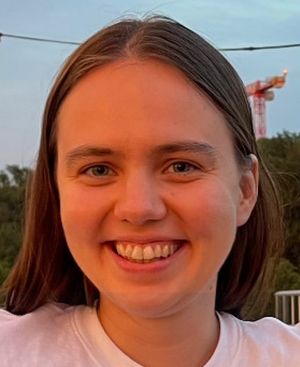
Prof. Dr. Anastasiia Koloskova
Professor of AI and Optimization | DM3L, UZH
Prof. Dr. Anastasiia Koloskova is a Professor of Artificial Intelligence and Optimization at UZH. Her research sits at the intersection of machine learning, optimisation, decentralized and collaborative learning, and privacy. Her background includes research at Stanford and a PhD from EPFL recognised with major thesis awards. In the CAS, she explains how optimisation choices and learning architecture influence model stability, scalability and governance. Participants gain a clearer understanding of why an algorithm converges, where it can fail, and how privacy or distributed-data constraints change the design of reliable AI systems.
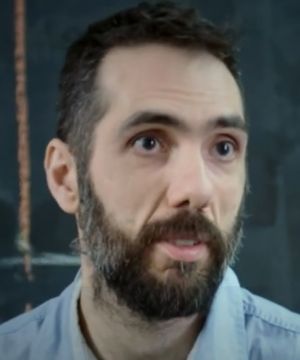
Prof. Dr. Nicola Serra
Professor of Physics and Machine Learning | DM3L and Department of Physics, UZH
Prof. Dr. Nicola Serra is Full Professor at UZH, working at the interface of experimental particle physics, machine learning and decision systems under uncertainty. His group develops reinforcement-learning, graph-neural-network and generative methods for complex scientific systems, including detector design, high-volume event reconstruction and simulation. The work has expanded to healthcare, epidemiology, logistics and supply-chain decision support. In the CAS, he brings a high-stakes perspective on deep learning, rare-event detection, simulation and uncertainty-aware decisions, helping participants distinguish a strong predictive result from a model that is robust enough for risk-sensitive use.
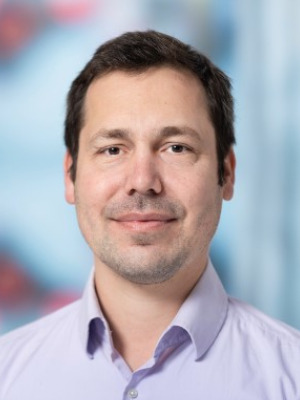
Prof. Dr. Jan Dirk Wegner
Professor of Data Science for Sciences | Head of EcoVision Lab, UZH
Prof. Dr. Jan Dirk Wegner holds the Data Science for Sciences chair at UZH's DM3L, where he leads the EcoVision Lab. His research combines machine learning, computer vision and remote sensing to answer environmental and geoscientific questions at very large scale. In the CAS, he shows how geospatial AI can enrich climate and emerging-risk analysis, from exposure mapping and event detection to monitoring environmental change. His contribution also addresses uncertainty, transferability and the limits of remotely sensed data when models are moved across regions or operating conditions.
MODULE 3 | 2 ECTS
Explainable and Ethical AI
Interpretability, fairness, privacy and accountable model governance.
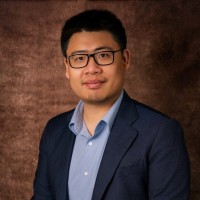
Prof. Dr. François Hu
Professor of AI and Actuarial Sciences and Lead AI Research Scientist | ISFA Lyon and Ekimetrics
Prof. Dr. François Hu holds the chair of AI and Actuarial Sciences at ISFA, Université Claude Bernard Lyon 1 and is Lead AI Research Scientist at Ekimetrics. Previously, he was Head of the R&D AI Lab at Milliman France. He is the author of EquiPy, an open-source package for bias assessment. His research and teaching connect algorithmic fairness, interpretability, privacy, semi-supervised learning and predictive performance. In the CAS, he leads the Explainable and Ethical AI component. Participants learn how to examine model decisions, test for bias, balance fairness and accuracy, and create explanations that are meaningful to model owners, clients, auditors and regulators, rather than merely technically available.
MODULE 4 | 3 ECTS
Applications Studios: Emerging Risks
Networks, cyber risk, climate and environmental shocks, and scenario propagation.
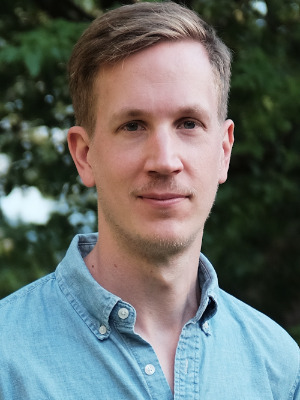
Prof. Dr. Alexandre Bovet
Professor of Quantitative Network Science | DM3L, UZH
Prof. Dr. Alexandre Bovet is Assistant Professor of Quantitative Network Science at UZH's DM3L and a professor of the Digital Society Initiative. His team develops machine-learning methods and mathematical models for complex interconnected systems. In the CAS, he provides tools for analysing risks that propagate through relationships rather than isolated entities. Participants examine how network structure shapes contagion, concentration, common-cause effects and scenario propagation across financial, operational and cyber systems, and how dynamic networks can reveal channels of vulnerability that conventional tabular models may miss.
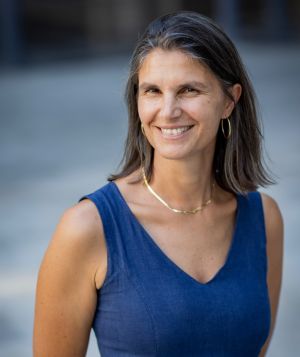
Prof. Dr. Caroline Hillairet
Professor and Head of the Actuarial Programme | ENSAE Paris
Prof. Caroline Hillairet is Professor at ENSAE Paris, leads its actuarial programme and is a member of CREST's Finance and Insurance Laboratory. She co-leads the Risk Foundation within the Louis Bachelier Institute's joint research initiative on actuarial modelling of cyber risk and also works on longevity, long-term financial risks, credit risk and asymmetric information. Her research is especially relevant where losses are sparse, heavy-tailed and contagious. In the CAS, she develops a quantitative view of cyber risk, linking frequency and severity modelling with network accumulation, insurability, mitigation and capital implications.
CROSS-MODULE CONTRIBUTORS
Prof. Dr. Reinhard Furrer contributes statistical and climate-model expertise, while Prof. Dr. Jan Dirk Wegner contributes geospatial AI and remote-sensing methods. Two additional applied guest contributors are still to be confirmed.